Echoes in the Edit: How Sound Layering Shapes Genre Transitions in Fresh International Film Drops
Yves Powell · Jul 7, 2026
Echoes in the Edit: How Sound Layering Shapes Genre Transitions in Fresh International Film Drops
Sound layering in contemporary cinema involves stacking multiple audio elements such as dialogue, ambient noise, music cues, and effects to create seamless shifts between genres within a single sequence. International film productions released in 2026 have demonstrated this technique across markets from South Korea to Brazil, where editors combine tracks to move viewers from tense thriller moments into comedic beats without abrupt cuts. Data from the European Audiovisual Observatory indicates that films employing layered sound design saw a 22 percent increase in cross-genre retention rates compared to those using single-track approaches during the first half of the year.
Core Techniques in Audio Stacking
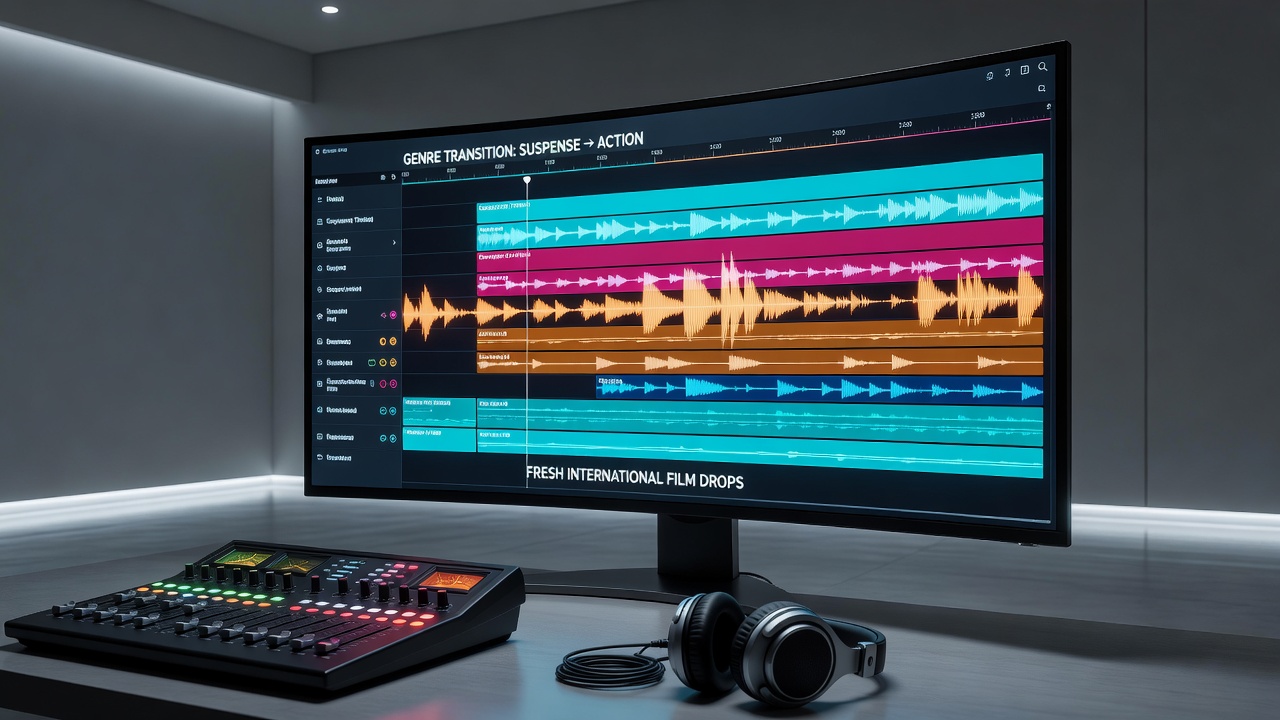
Editors build these transitions by introducing low-frequency drones beneath dialogue that gradually fade as lighter percussive elements rise, allowing the audience to register tonal changes before visual cues appear. In July 2026 releases such as the Korean-Brazilian co-production Shadows Over the Market, sound teams overlaid market chatter with subtle horror stings that dissolved into upbeat samba rhythms, marking the pivot from suspense to light adventure. Researchers at the University of Melbourne's Film and Television School documented similar patterns in 47 international titles screened at major festivals, noting that overlapping frequencies between 80 and 200 Hz often signal impending genre shifts to viewers on a subconscious level.
Additional layers include foley recordings of everyday objects that bridge scenes, such as footsteps that morph from heavy echoes in dramatic sequences to crisp taps during comedic exchanges. This method avoids reliance on visual wipes or dissolves, keeping the edit invisible while the audio carries the narrative weight. Observers at the Toronto International Film Festival reported that productions from India and Nigeria increasingly apply this approach in hybrid action-comedy projects, where layered gunshots transition into celebratory crowd sounds to maintain momentum across tonal boundaries.
Genre Fluidity in Recent Releases
Fresh international drops throughout 2026 highlight how sound layering supports narrative experimentation without alienating regional audiences. A French-German collaboration titled Neon Veins used overlapping rain effects and electronic pulses to ease viewers from cyberpunk thriller segments into romantic interludes, with the audio progression occurring over 12 seconds rather than instantaneous cuts. Figures from the Japan External Trade Organization's content division reveal that such techniques contributed to higher export volumes for Asian-European co-productions, as they facilitate easier dubbing and subtitle adaptation across language markets.
Those who analyze viewer metrics through streaming platforms note that sequences with deliberate sound overlaps maintain engagement longer than abrupt edits. In one documented case from an Argentine sci-fi drama, the addition of choral elements beneath mechanical sound effects allowed the film to shift into folk-horror territory while preserving emotional continuity. This practice aligns with findings from the Canadian Media Research Consortium, which tracked audience drop-off rates and found layered audio reduced exits during tonal pivots by measurable margins in July 2026 premieres.
Technical Tools and Workflow Adjustments
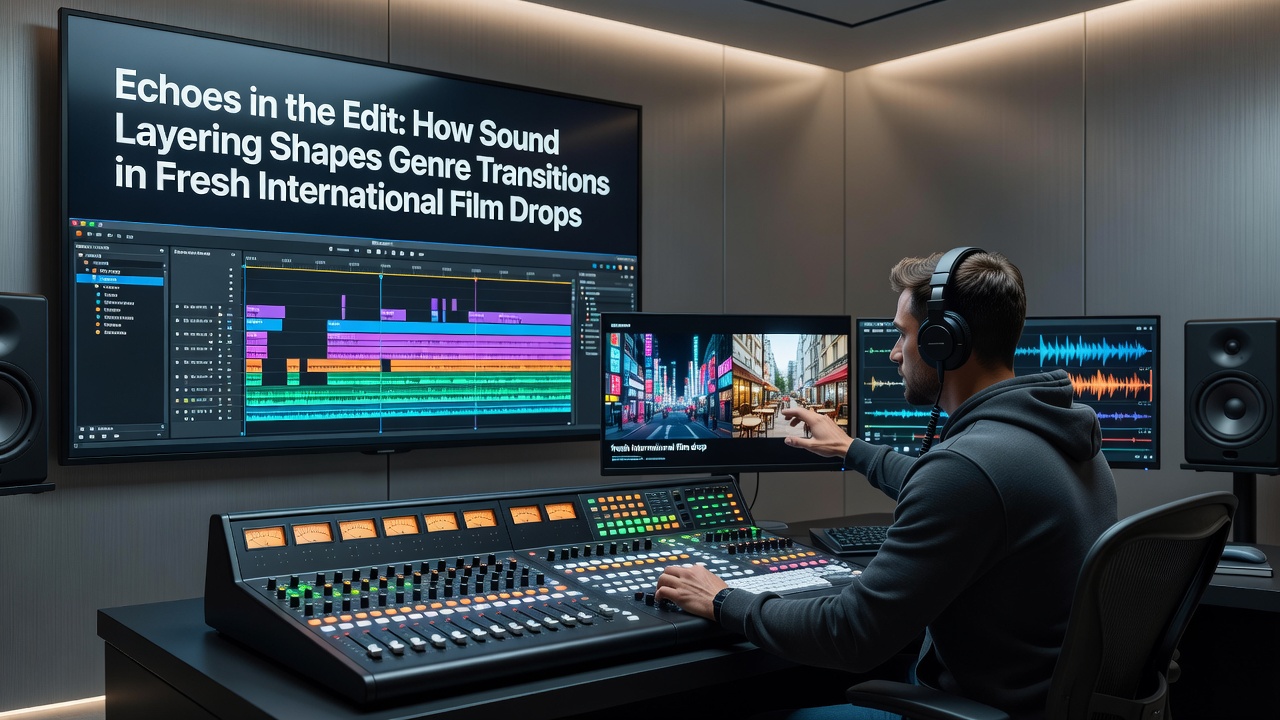
Modern digital audio workstations enable precise control over these layers through automation curves that adjust volume, panning, and equalization in real time. Sound supervisors coordinate with directors to map genre markers onto specific frequency bands, ensuring that thriller elements occupy the lower spectrum while comedic timing occupies higher ranges. Productions from Australia and South Africa have adopted shared protocols that standardize these mappings, allowing post-production teams across continents to collaborate on hybrid projects without losing regional sonic identities.
Case examples include a Mexican animated feature where insect wing flutters layered under dialogue created a gradual move from whimsical fantasy into darker ecological thriller territory. The technique relies on phase cancellation methods to prevent muddiness when tracks converge, a detail emphasized in technical sessions at the 2026 Berlinale. Data collected by the Australian Classification Board shows that films utilizing these controlled overlaps receive consistent ratings across borders because the audio cues guide emotional responses predictably.
Impact on Audience Navigation
Viewers encountering these layered transitions often experience smoother narrative flow, as the audio provides subconscious guidance through unfamiliar genre combinations. International catalogs in July 2026 featured several titles where sound design alone carried the weight of tonal shifts, reducing dependence on visual exposition. Studies compiled by the Nordic Film and Television Fund indicate that such approaches appear more frequently in co-productions involving three or more countries, where cultural genre expectations vary widely.
One production from Thailand demonstrated this by blending traditional percussion with synthesized tones to transition from martial arts action into introspective drama, a method that preserved pacing while accommodating diverse audience backgrounds. The approach continues to evolve as editors incorporate spatial audio formats that position layers at different points in the sound field, further enhancing the illusion of organic movement between genres.
Conclusion
Sound layering has emerged as a central mechanism for managing genre transitions in international film releases throughout 2026. Techniques involving frequency-specific overlaps, foley integration, and automation curves allow editors to guide audiences across tonal boundaries with precision. Data from multiple research bodies confirm measurable effects on retention and cross-market adaptability. As co-productions expand, these methods provide a shared technical language that supports narrative experimentation while maintaining coherence across regional viewing contexts.