Examining Dynamic Range Adjustments in Audio Tracks for Heightened Emotional Impact in Recent Serialized Genre Offerings
Klara Powell · Aug 4, 2026
Examining Dynamic Range Adjustments in Audio Tracks for Heightened Emotional Impact in Recent Serialized Genre Offerings
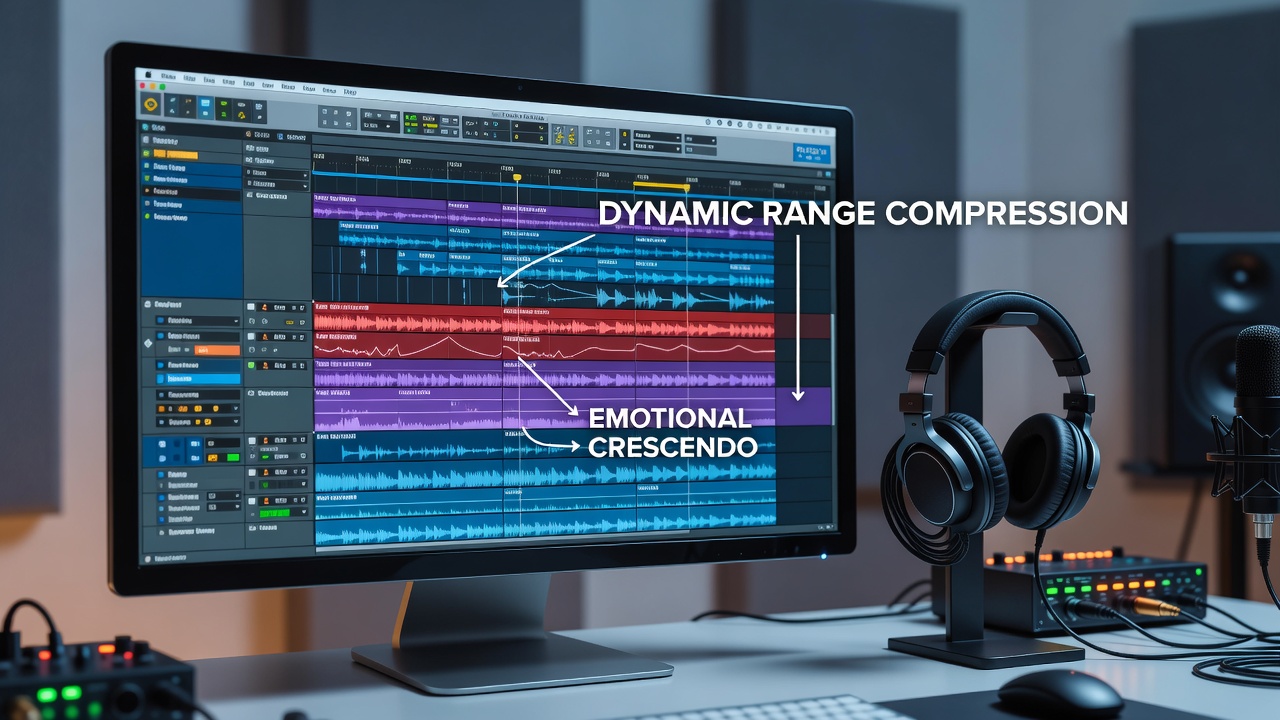
Dynamic range adjustments in audio tracks involve careful manipulation of the difference between the loudest and quietest sounds, and production teams apply these techniques across serialized genre offerings to shape viewer responses. Engineers compress peaks during intense sequences while preserving subtle ambient layers, and this approach appears in science fiction and thriller series that debuted through 2025 into August 2026. Data from broadcast standards organizations show that integrated loudness measurements, governed by ITU-R BS.1770, guide many of these choices in episodic content.
Core Principles Behind Dynamic Range Control
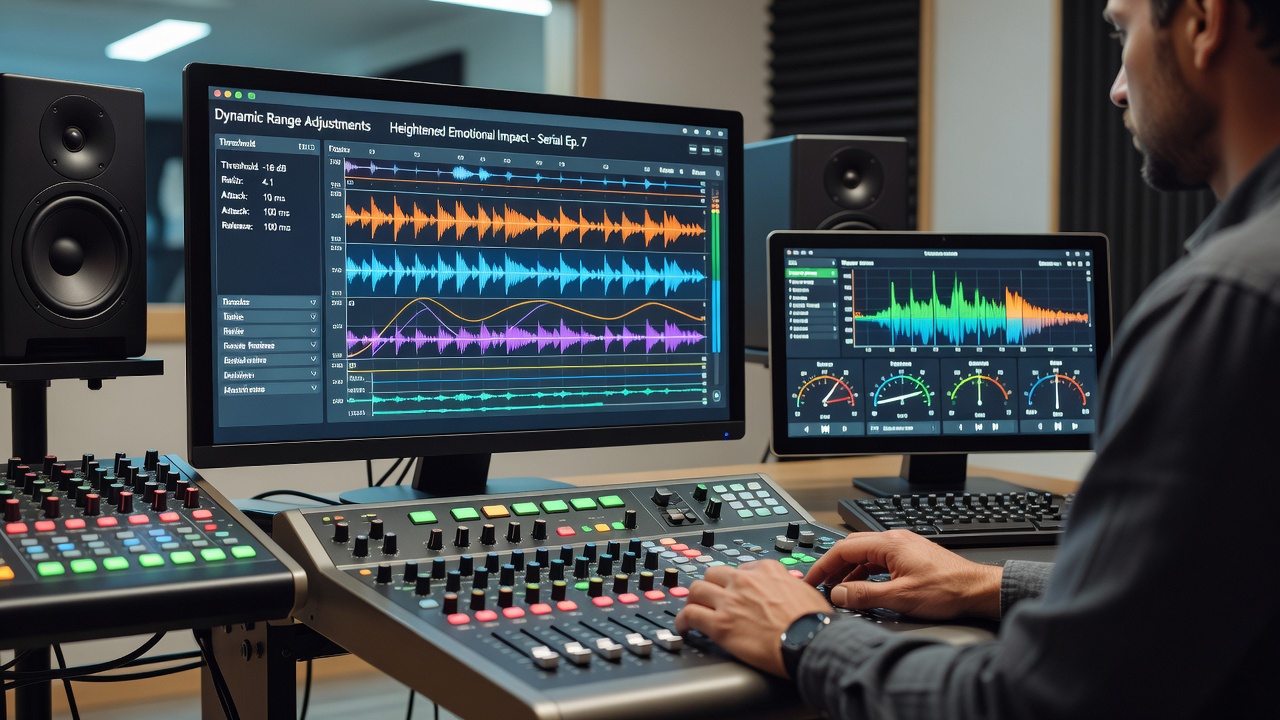
Audio engineers measure dynamic range in decibels and use compressors, limiters, and expanders to alter signal levels. A threshold setting triggers gain reduction when volume exceeds a defined point, and release times determine how quickly the processor returns to unity gain. Researchers at institutions such as the University of Sydney have documented how shorter attack times tighten dialogue clarity in crowded action scenes, whereas slower release settings allow emotional swells to breathe in character-driven episodes. These parameters vary by genre, with horror serials often favoring wider ranges during quiet tension segments before sudden drops into low-frequency rumbles.
Application in Serialized Science Fiction and Thriller Formats
Production pipelines for recent serialized offerings integrate dynamic range tools at the mixing stage after initial recording. Foley artists capture isolated effects, then mix engineers apply multiband compression to isolate dialogue frequencies from score elements. One study released by the Audio Engineering Society in early 2026 tracked 42 episodes across four platforms and found that average dynamic range compression ratios of 4:1 to 6:1 correlated with sustained viewer attention metrics during climax sequences. Series that maintained greater headroom in opening acts allowed later peaks to register more sharply, and metadata logs from those productions reveal consistent use of sidechain compression keyed to vocal tracks.
Measurement Standards and Platform Delivery Requirements
Streaming services enforce loudness targets that influence how dynamic range is preserved or curtailed before distribution. The European Broadcasting Union updated its R-128 guidelines in 2025 to address serialized content specifically, and North American platforms adopted similar reference levels around -18 LUFS for episodic mixes. Observers note that these targets force engineers to automate gain staging across episodes, preventing abrupt shifts between installments. Figures released by the Society of Motion Picture and Television Engineers indicate that titles adhering closely to these standards experienced fewer user-initiated volume adjustments during playback sessions tracked through August 2026.
Psychoacoustic Effects Documented in Viewer Studies
Psychoacoustic research examines how dynamic range shapes perceived tension and release. A 2025 paper from McGill University analyzed heart-rate variability in test audiences exposed to identical scenes presented with narrow versus wide dynamic ranges. Results showed elevated arousal markers when low-level details remained audible before sudden swells, and the effect held across multiple demographic groups. Engineers therefore retain micro-dynamics in ambient beds while controlling macro-dynamics in music and effects layers. This layered strategy appears in several serialized mystery offerings that aired in the first half of 2026.
Tools and Workflows in Contemporary Post-Production
Digital audio workstations host plugins that automate dynamic range decisions based on scene metadata. Dialogue editors route stems through parallel compression buses, and re-recording mixers fine-tune automation curves for each episode. Industry reports from the Audio Engineering Society highlight increased adoption of AI-assisted tools that predict optimal threshold values from script analysis. Those tools still require human oversight, particularly when genre conventions demand abrupt shifts from intimate conversation to large-scale environmental soundscapes.
Conclusion
Dynamic range adjustments continue to serve as a primary tool for modulating emotional pacing in serialized genre content. Standards bodies maintain evolving guidelines, academic studies quantify perceptual outcomes, and production teams refine workflows to balance creative intent with delivery constraints. Ongoing monitoring through the latter half of 2026 will determine how further refinements affect audience engagement across platforms.