Research Findings on the Correlation Between Release Timing and Viewer Engagement in Various Narrative Formats
Sam Wolf · May 28, 2026

Research Findings on the Correlation Between Release Timing and Viewer Engagement in Various Narrative Formats
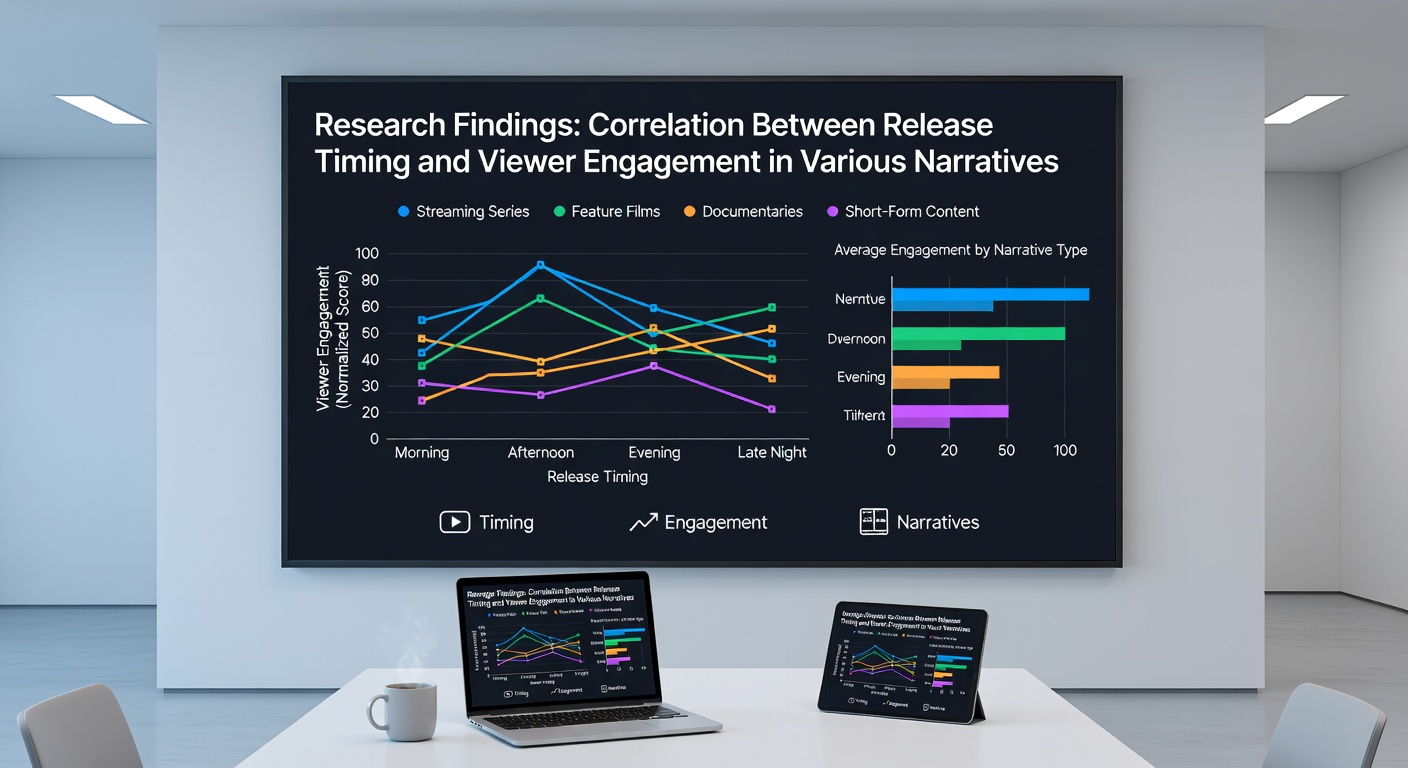
Research into release timing reveals consistent patterns that link scheduling decisions with measurable shifts in audience interaction across films, television series, and other narrative formats, and data from multiple studies continues to track how day-of-week choices, seasonal windows, and simultaneous drops influence completion rates plus social sharing metrics. Analysts who examine large datasets note that weekend releases often coincide with higher initial viewership numbers in theatrical and streaming environments alike, whereas midweek drops tend to produce steadier but lower-volume engagement curves that stretch over longer periods.
Patterns Across Film Releases
Studies conducted by academic teams at institutions in North America and Europe have quantified how Friday openings generate the strongest first-weekend spikes for feature films, and researchers tracking box-office plus streaming numbers report that titles launched between late spring and early summer frequently sustain engagement longer than those released during winter months when competing events draw attention elsewhere. In May 2026, several major distributors adjusted their calendars after reviewing aggregated viewer data that showed holiday-adjacent windows delivered incremental lifts in repeat-view metrics for action-driven narratives, while quieter periods yielded steadier but narrower demographic reach.
Television and Serialized Content
Television schedulers have long observed that Sunday and Monday slots capture peak engagement for ongoing series, and recent analyses from Canadian media regulators confirm that episodes dropped on these days achieve higher completion percentages within the first 48 hours compared with Thursday or Friday airings. Serialized formats benefit further when new seasons align with cultural calendar markers such as back-to-school periods or award seasons, because viewers integrate episodes into established routines and maintain consistent interaction across multiple weeks. Data collected through platform analytics shows binge-completion rates climbing when entire seasons release on Fridays, allowing audiences uninterrupted blocks of time that reduce drop-off between episodes.
Streaming Platforms and Global Timing
Streaming services operating across time zones have adopted staggered release strategies that account for regional viewing peaks, and reports from the Australian Communications and Media Authority indicate that simultaneous global drops can boost early social conversation volume while sequential regional releases sometimes extend total engagement duration by spreading discussion across successive days. One study revealed that narrative-driven content released at 9 p.m. local time in key markets produced stronger second-day retention than midnight launches, because audiences finished episodes before typical sleep schedules and returned with fresh recall the following evening. Those who track cross-platform metrics note that simultaneous social media amplification during these windows magnifies the initial surge and feeds algorithmic recommendations that carry momentum into subsequent weeks.
Additional Narrative Formats
Podcasts and interactive digital narratives exhibit parallel sensitivities to release timing, with research from European media observatories showing that midweek episodes maintain steadier download curves because listeners incorporate them into commute or work routines, whereas weekend drops generate higher initial spikes followed by quicker decay. Video game story campaigns that launch mid-month rather than at month-end often record prolonged play-session lengths, as players avoid overlap with major competing titles that command attention during peak shopping periods. Observers who aggregate cross-format datasets emphasize that the correlation between timing and engagement strengthens when creators align launches with audience availability patterns rather than solely with internal production milestones.
Conclusion
Collective findings across formats demonstrate that release timing functions as a measurable variable that shapes both immediate spikes and sustained interaction levels, and organizations that integrate viewer-habit data into scheduling decisions record more predictable engagement trajectories. Continued monitoring through 2026 and beyond will likely refine these correlations as platforms gather finer-grained regional and demographic information that further informs optimal windows for each narrative type.