Subtitle Sync Delays Reshaping Humor Beats in Dubbed Global Episodics from Ad-Funded Video Repositories
Sam Lange · Aug 18, 2026
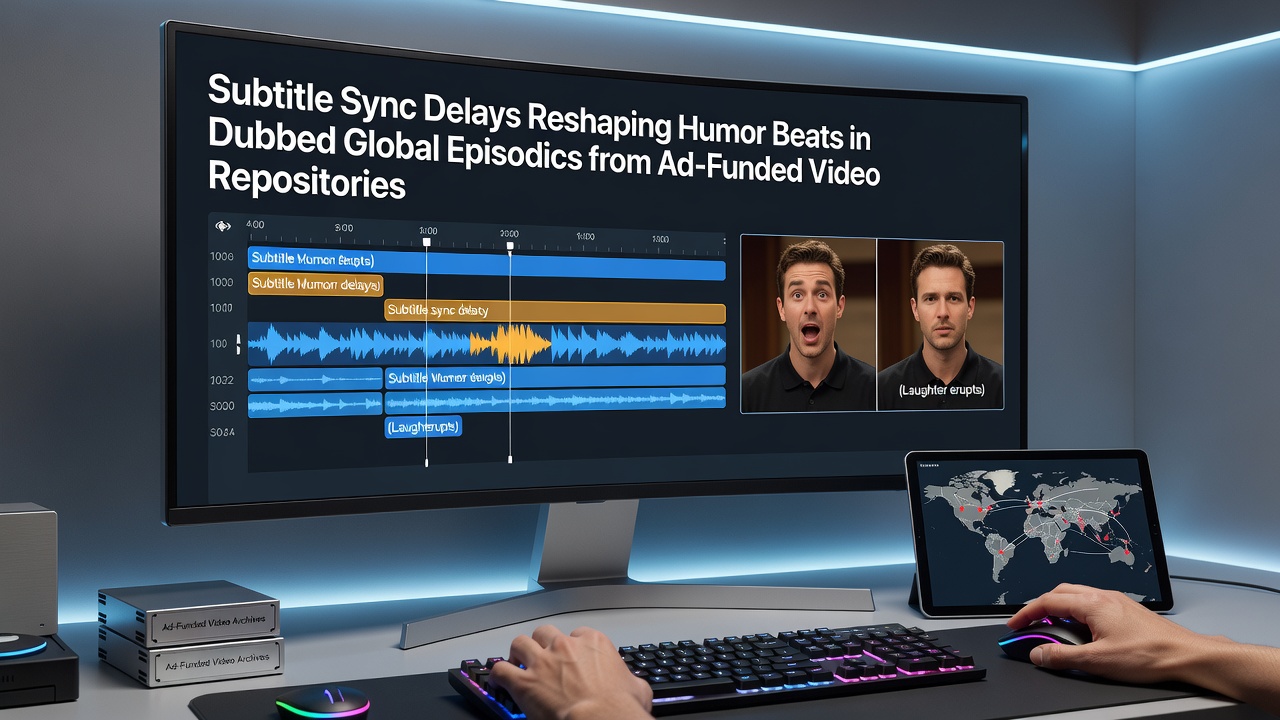
Subtitle Sync Delays Reshaping Humor Beats in Dubbed Global Episodics from Ad-Funded Video Repositories
Subtitle synchronization challenges have become a recurring issue across dubbed international television series hosted on ad-supported video platforms, where timing mismatches between spoken dialogue and on-screen text alter the delivery of comedic beats in noticeable ways. Platforms that rely on advertising revenue to offer free access to global episodics often process large volumes of content through automated or semi-automated workflows, and these systems frequently introduce small offsets in subtitle placement that shift punchlines or reactions by fractions of a second. Observers note that such offsets accumulate during the conversion of original audio tracks into localized versions, particularly when episodes originate from multiple production regions and carry varying frame rates or encoding standards.
Mechanics Behind Subtitle Placement in Dubbed Series
Production teams create dubbed versions by replacing original dialogue with translated audio while generating corresponding subtitles that aim to match both the new speech and visual cues, yet ad-funded repositories commonly compress or re-encode files to optimize streaming speeds and storage costs. This re-encoding step can displace subtitle cues by 200 to 800 milliseconds according to technical analyses conducted by media technology groups, and the displacement becomes most apparent during rapid-fire exchanges typical of ensemble comedies. Data from platform monitoring reports show that episodes from East Asian and Latin American series experience higher rates of these offsets when transferred to repositories serving North American and European audiences because of differences in audio sampling rates and closed-caption formatting standards.
Effects on Timing of Comedic Beats
Comedy in episodic formats depends on precise alignment between verbal delivery, facial expressions, and audience anticipation, so even brief subtitle delays can move a joke's payoff outside its intended window. Researchers tracking viewer retention metrics on several ad-supported services documented drops in engagement during scenes where subtitles lagged behind punchlines by more than 300 milliseconds, with completion rates falling by measurable percentages in affected episodes. Those who study audiovisual translation point out that laugh tracks or reaction shots lose their synchronization when text appears after the audio peak, reducing the cumulative effect that writers build across multiple beats within a single scene.
Platform Workflows and Processing Constraints
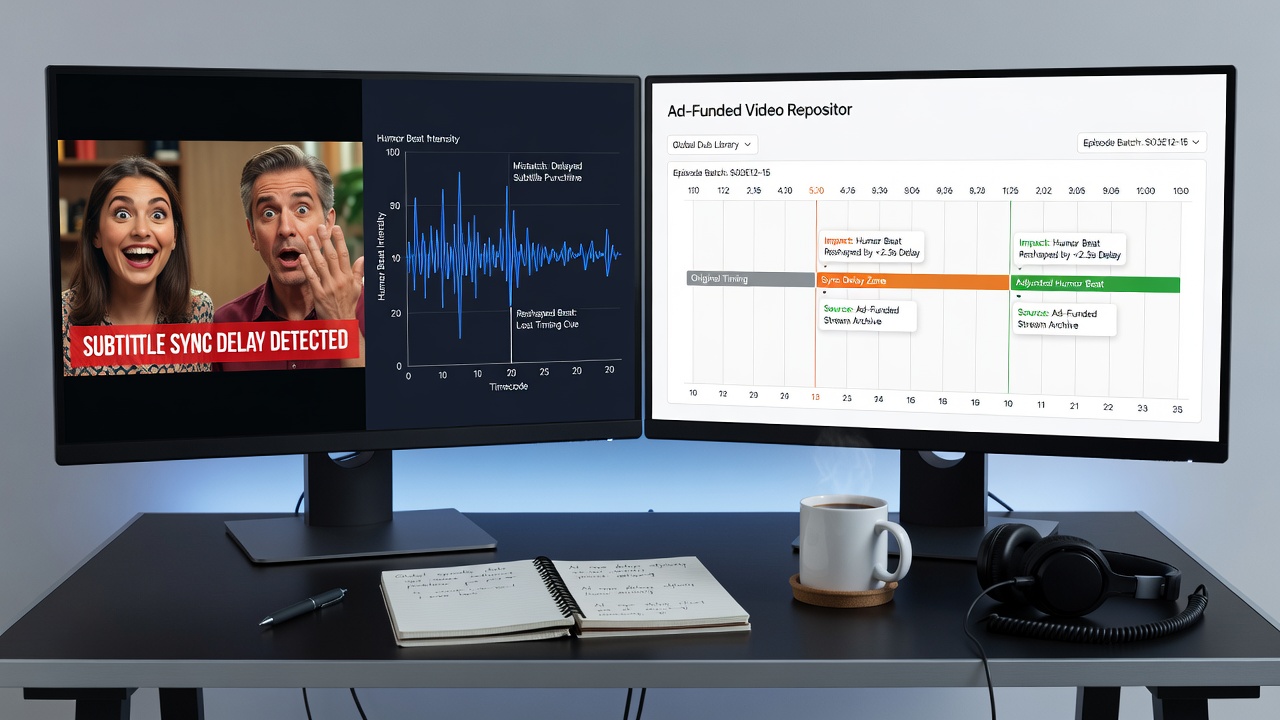
Ad-funded video repositories prioritize rapid ingestion of new episodes to maintain fresh catalogs, which leads to streamlined subtitle insertion processes that rely heavily on machine translation tools followed by minimal human review. These workflows handle thousands of hours monthly, and quality control teams focus primarily on language accuracy rather than frame-accurate timing adjustments. Figures released by industry monitoring organizations indicate that subtitle offset complaints increased steadily through mid-2026, with spikes noted after major catalog expansions in August 2026 when several platforms added simultaneous releases from multiple territories. The added volume strained existing synchronization pipelines and amplified the frequency of timing discrepancies in dubbed comedy content.
Viewers accessing these repositories encounter the issue most clearly in multi-camera sitcoms and mockumentary formats where overlapping dialogue and quick visual gags form the core structure. One study of engagement patterns across ad-supported libraries found that episodes with subtitle offsets above 500 milliseconds showed reduced rewatch rates compared with correctly timed versions of the same titles, suggesting the timing shift affects both initial and repeated consumption.
Regional Patterns Observed in August 2026
Regional differences in subtitle handling emerged more distinctly during the summer of 2026 as platforms adjusted encoding parameters to accommodate varying bandwidth conditions. European repositories reported fewer severe offsets after implementing stricter timing verification steps, while repositories serving audiences in Asia and Oceania continued to show higher variability because of differences in source material preparation. According to data compiled by the European Audiovisual Observatory, synchronization accuracy improved in several Western European markets after new guidelines took effect, yet comparable improvements remained uneven across other regions where ad-supported services dominate consumption.
Technical Factors Contributing to Offsets
Frame rate conversion between original production standards and platform delivery formats represents one primary source of displacement, since many global series originate at 25 frames per second while certain repositories standardize at 23.976 or 30 frames per second. Subtitle files generated for one rate lose alignment when the video stream undergoes conversion without corresponding cue adjustments. Additional variables include variable bitrate audio encoding and the insertion of advertisement breaks that alter overall timeline references within a single episode file.
Viewer Adaptation and Platform Responses
Audiences have developed workarounds such as manual subtitle offset adjustments available in some player interfaces, though these features appear inconsistently across ad-funded services. Platform operators have begun testing automated alignment tools that compare audio waveforms with subtitle timestamps before final upload, and preliminary results shared by technical working groups suggest measurable reductions in average offset duration. Continued refinement of these tools could address the core timing issues that currently reshape comedic delivery in dubbed global episodics.
Conclusion
Subtitle synchronization delays in dubbed content from ad-supported repositories continue to influence how humor registers for international viewers, with processing constraints and encoding variations driving the observed timing shifts. Ongoing technical adjustments and regional guideline implementations offer pathways toward improved alignment, while current patterns documented through 2026 illustrate the scale of the challenge across diverse episodic catalogs.